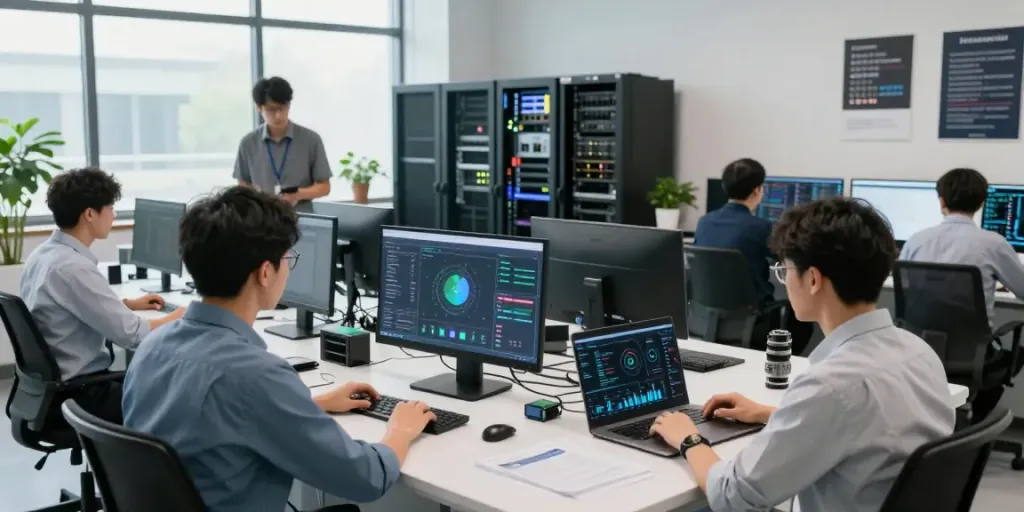
Understanding GPU Computing
As the demand for advanced computational power grows, organizations are increasingly turning to GPU computing to enhance their capabilities. Graphics Processing Units (GPUs) are uniquely designed to handle vast amounts of data simultaneously, which is critical for AI development, machine learning, and complex data analytics. This transformative technology not only speeds up processing time but also improves the efficiency of various applications across industries.
What is GPU Computing?
GPU computing refers to using a Graphics Processing Unit to accelerate computation processes beyond just rendering graphics. Unlike traditional CPUs, which are optimized for serial processing—executing one instruction at a time—GPUs are designed for parallel processing, enabling them to perform multiple operations concurrently. This characteristic significantly enhances performance in computationally intensive tasks such as deep learning, simulation, and image processing.
How GPU Computing Differs from Traditional Processing
While CPUs are powerful for general purposes, their architecture is not optimized for the parallel processing required by modern applications. GPUs, with their thousands of cores, can handle thousands of threads at once, making them ideal for tasks that can be broken down into smaller, independent operations. This difference allows GPU computing to excel in areas such as:
- Machine Learning: Training models on large datasets.
- Data Analysis: Rapidly processing and analyzing vast amounts of information.
- Scientific Simulations: Running complex simulations in physics, chemistry, and biology.
The Importance of GPUs in AI Development
In the realm of AI, GPUs play a crucial role in enabling the training of complex algorithms at unprecedented speeds. They facilitate the handling of large datasets that traditional processors would find cumbersome. This is pivotal for advancements in fields such as natural language processing, computer vision, and autonomous systems, where the need for quick, real-time data processing is essential.
Power Plans for GPU Computing
To leverage GPU computing effectively, businesses can explore various power plans tailored for AI infrastructure. These plans are structured to meet the specific energy requirements of GPU operations, ensuring that companies can scale their usage according to their needs without the burdens of managing physical infrastructure.
Exploring AI Infrastructure Power Plans
AI Infrastructure Power Plans offer a structured approach to harnessing GPU capabilities. These plans provide flexibility for users, allowing them to select configurations that match their operational needs. With options ranging from core access to advanced plans, users can choose the best fit for their computational workloads, ensuring efficiency and cost-effectiveness.
Calculating Contribution Rewards from Power Plans
Each power plan comes with its system for calculating rewards based on the actual performance of the supported AI workloads. This model incentivizes users to optimize their resource allocation, aligning their GPU utilization with the demands of the AI infrastructure. The process typically involves:
- Recording electricity consumption.
- Tracking input and output tokens associated with AI tasks.
- Calculating service revenues based on operational performance.
Choosing the Right Power Plan for Your Business
When selecting a power plan, businesses should consider their specific needs, such as the scale of operations, types of AI models in use, and anticipated workload fluctuations. Aligning a power plan with these factors ensures optimal performance and cost efficiency, enabling organizations to harness the full potential of GPU computing.
Challenges in Implementing GPU Computing
Despite the advantages that GPU computing offers, several challenges may hinder its widespread adoption. Companies must navigate these obstacles to fully realize the benefits of this technology.
Common Misconceptions about GPU Utilization
One prevalent misconception is that GPUs are only beneficial for gaming or graphics-related tasks. In reality, their parallel processing power makes them invaluable across a range of fields, including finance, healthcare, and research. Understanding these capabilities is crucial for businesses looking to adopt GPU computing.
Addressing Technical and Operational Challenges
Organizations may face technical issues such as compatibility with existing infrastructure or software challenges. Additionally, operational challenges include the management of GPU resources and ensuring efficient power usage. Addressing these issues requires a strategic approach, often involving the integration of specialized software solutions and ongoing training for personnel.
Strategies for Overcoming Barriers to Entry
To overcome these barriers, companies can:
- Invest in education and training for staff regarding GPU capabilities and optimization.
- Collaborate with technology partners to manage infrastructure efficiently.
- Implement monitoring tools to track performance and resource allocation.
Optimizing GPU Resources
Maximizing the efficiency of GPU resources is essential for organizations looking to scale their AI initiatives effectively. Implementing best practices can lead to significant improvements in performance and cost savings.
Best Practices for Scalable GPU Infrastructure
Scalability in GPU infrastructure can be achieved by adopting flexible power plans and ensuring that hardware is continually updated. Leveraging cloud-based GPU resources can also enable scalability while minimizing upfront costs.
Monitoring and Measuring GPU Performance
To optimize GPU performance, regular monitoring is essential. Utilizing analytics tools can provide insights into GPU utilization rates, temperature, and load balancing. This information is vital for identifying bottlenecks and ensuring that resources are allocated effectively.
Future-Proofing Your GPU Setup
Future-proofing involves investing in adaptable technologies and keeping abreast of GPU advancements. As AI continually evolves, so must the infrastructure that supports it. Organizations should aim to stay ahead by integrating cutting-edge technologies and participating in ongoing education.
The Future of GPU Computing
Looking ahead, the landscape of GPU computing is poised for significant change, driven by technological advancements and the growing demand for AI capabilities across sectors.
Trends Influencing GPU Technology in 2026 and Beyond
Key trends include the rise of heterogeneous computing, where different types of processors work together, and the increased focus on energy efficiency. As sustainability becomes a priority, energy-efficient GPUs will become more prevalent, allowing organizations to reduce their carbon footprint while maintaining high performance.
Real-World Applications of GPU Computing in Various Industries
From healthcare to finance, GPU computing is making waves in various fields. In healthcare, for instance, GPUs accelerate the processing of medical imaging, while in finance, they help in real-time risk assessments and fraud detection.
Preparing for the Evolving Landscape of AI and GPU Computing
Organizations aimed at thriving in the evolving AI landscape should consider adopting flexible power plans that accommodate rapid changes in workload and computational demands. By being proactive, businesses can position themselves advantageously in a competitive market.
What is the role of GPU computing in AI development?
GPU computing is pivotal in accelerating AI model training, enabling real-time processing of data, and enhancing the performance of AI systems. Its parallel processing capabilities make it crucial for handling the large datasets typical of AI applications.
How can businesses optimize their GPU resources?
Businesses can optimize GPU resources by choosing the appropriate power plans, regularly monitoring performance, and ensuring effective load balancing among available GPUs. Additionally, investing in staff training and leveraging cloud-based GPU resources can further enhance efficiency.
What are the key benefits of AI infrastructure power plans?
AI infrastructure power plans provide flexibility, cost savings, and scalability. They enable businesses to match their power usage with actual needs and take full advantage of GPU capabilities without the burden of maintaining physical infrastructure.
What challenges do companies face in implementing GPU computing?
Challenges include misconceptions about GPU capabilities, technical compatibility issues, and the need for specialized training. To address these, businesses must adopt a strategic approach, seeking partnerships and utilizing monitoring tools.
How does GPU computing differ from traditional CPU processing?
The primary difference lies in processing architecture; GPUs are designed for parallel processing, making them faster for data-heavy tasks, while CPUs excel in serial processing, focusing on fewer tasks at once. This distinction gives GPUs a significant advantage in AI and machine learning applications.